

Blog
A Complete Guide to Pakistani Wedding Events: From Dholki to Walima

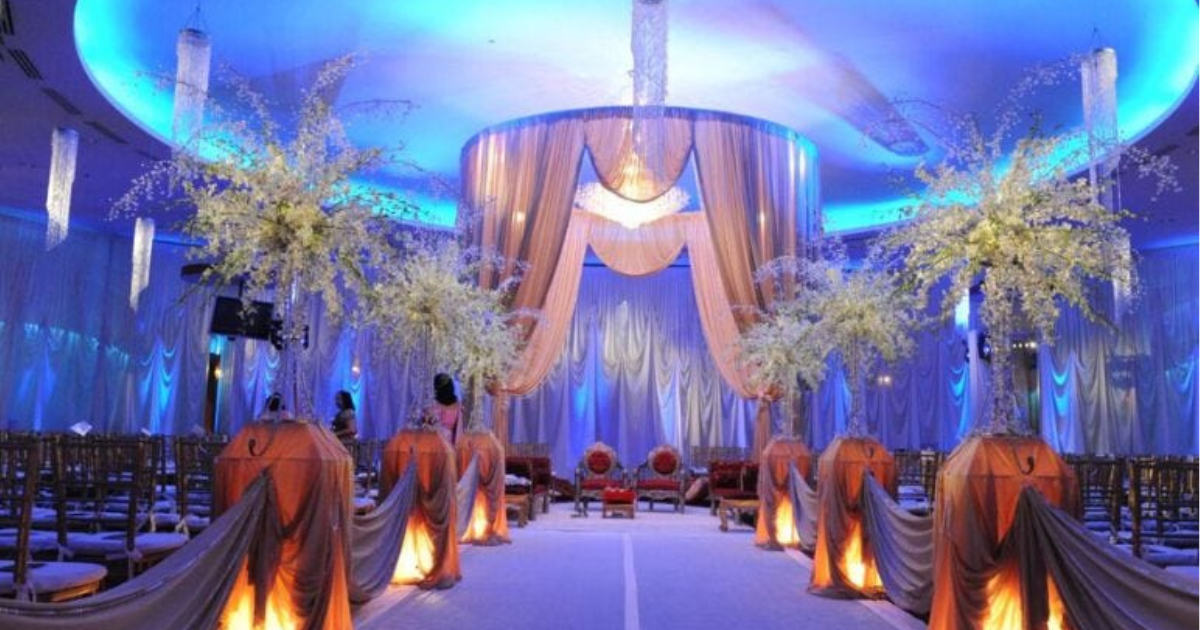
Pakistani wedding events are about celebrating love, colors, and traditions. These events are not just about the groom and bride; they also bring families and close friends together to cherish the festivity’s love and joy. From dholki celebrations to grand walima, Pakistani wedding customs and traditions have their charm and excitement.
Pakistani marriage traditions are incomplete without following old traditions and culture. The festivities begin with an engagement ceremony that marks the official start of the marriage. Events like dholki and ubtan are perfect for a small get-together where everyone enjoys and dances to the dhol beats.
Then comes the girls’ favorite wedding function, Mehndi. Everyone loves this function, as it’s full of bright dresses, dances, and adorable henna designs. The marriage ceremony is incomplete without Nikkah, as it’s the main event, followed by barat and walima.
Indeed, dresses, jewelry, shoes, and, mainly, wedding food all play pivotal roles in making a wedding function memorable for years. Similarly, wedding celebrations are incomplete without decor. Everything matters, from floral arrangements to fairy lights, stage setup, and sophisticated table design.
Pakistani wedding events have incomparable vibes. Each function is celebrated differently with a unique theme and decor.
Let’s explore Pakistani wedding traditions together.
Pakistani Wedding Events: The Full Sequence
A traditional Pakistani wedding includes seven main events: Dholki, Mayun, Mehndi, Nikkah, Barat, Rukhsati, and Walima.
Some families combine events or skip a few, depending on their budget and preferences. Pakistani diaspora families in the United States often condense the celebrations into three to four days to accommodate guests flying in from different cities.
| # | Function | Timing | Hosted By | Decor Focus |
|---|---|---|---|---|
| 1 | Dholki | 2 to 4 weeks before Barat | Bride’s family | Colorful draping, string lights, floor seating |
| 2 | Mayun | 3 to 7 days before Barat | Bride’s family | Yellow and gold, floral garlands, intimate setup |
| 3 | Mehndi | 1 to 2 days before Barat | Both families | Vibrant colors, floral walls, dance floor centerpiece |
| 4 | Nikkah | Morning of Barat or separate day | Both families | Elegant florals, jaali panels, modest staging |
| 5 | Barat | The main wedding day | Groom’s family | Grand stage, full floral arch, aisle setup |
| 6 | Rukhsati | End of Barat day | Bride’s family | Emotional farewell, flower petals, candle settings |
| 7 | Walima | 1 to 3 days after Barat | Groom’s family | Elegant reception decor, lighter florals |
Dholki: Where the Celebrations Begin
The Dholki is the first and most relaxed event of a Pakistani wedding. Close friends and family from both sides gather a few days before the wedding to sing, dance, and celebrate together.
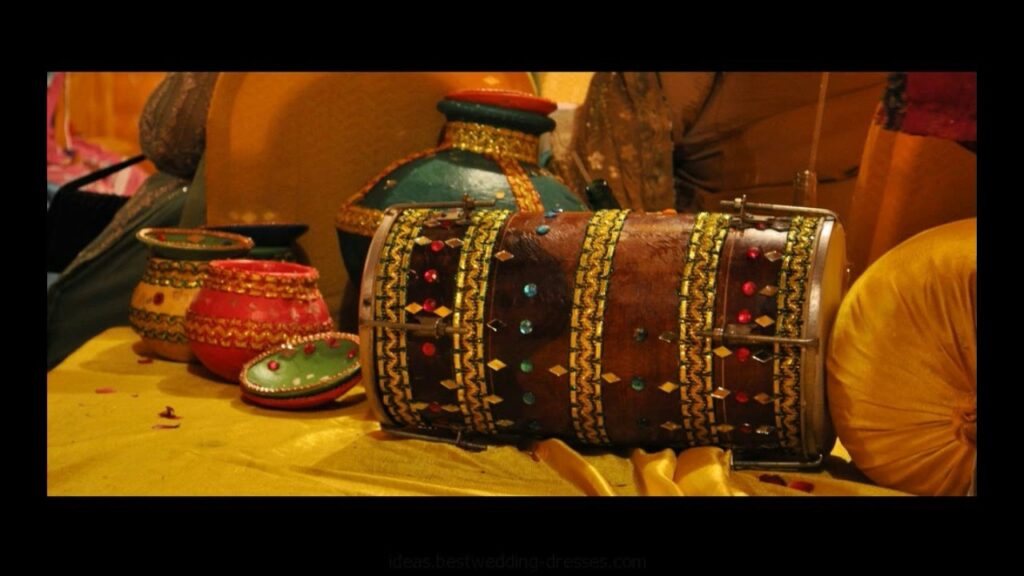
The event gets its name from the dhol, a double-headed drum that sets the beat for traditional wedding songs called geet. The atmosphere is informal, colorful, and full of genuine joy.
Guests wear bright outfits and sit in circles, singing songs passed down through generations. Homemade food, chai, and mithai are always part of the spread.
Immediate family members who live abroad or in other cities often fly in specifically for the Dholki and stay through the end of the wedding.
Dholki Decor Themes
Modern Dholki setups have moved well beyond simple home arrangements. Popular themes include truck art panels with hanging tassels, Moroccan setups with lanterns and floor cushions, rangoli art with fairy light canopies, and garden-themed gatherings with marigold strings and earthen pots.
For Pakistani families in the DFW area, Dholki evenings at home or private halls are becoming more elaborate, with full decor setups that feel both traditional and intimate.
Mayun: The Turmeric Ceremony
The Mayun is one of the most intimate events of a Pakistani wedding. It marks the beginning of the bride’s official preparation for her new life.
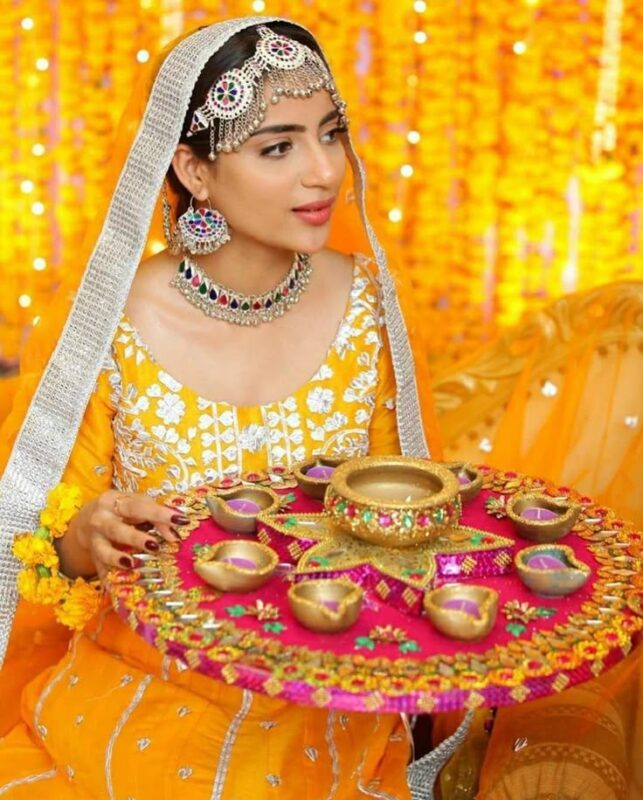
After the Mayun ceremony, the bride traditionally stays home to rest and prepare until the wedding. She wears yellow throughout, a color associated with prosperity, positivity, and turmeric’s healing properties.
What Happens at Mayun?
Family members apply ubtan on the bride and groom. Ubtan is a paste made from turmeric, gram flour, rose water, and sandalwood. The ritual is believed to give the skin a natural glow before the wedding day.
Family elders take turns applying the ubtan while offering blessings and prayers. Traditional Mayun songs, softer and more emotional than Dholki music, are sung throughout the gathering.
For Pakistani diaspora families in the United States, the Mayun holds particular emotional weight. Many families fly in relatives from Pakistan specifically for this function, making it one of the most nostalgic gatherings of the entire wedding week.
Mayun Decor Trends
Yellow and gold dominate the Mayun color palette. Marigold flower walls, turmeric-colored draping, cane furniture with floral accents, and handcrafted signage are all popular.
Outdoor garden Mayuns with string lights and earthy tones are growing in popularity across the DFW area and other US cities with large Pakistani communities.
Mehndi: The Night of Henna, Color, and Dance
The Mehndi is the most vibrant and entertaining event of the entire Pakistani wedding. Both families come together for an evening of henna, live music, dancing, and performances.
Professional mehndi artists apply intricate designs on the bride’s hands and feet, a process that can take several hours. While this is happening, the celebrations continue in full force around her.
The Tradition Behind Mehndi
Applying henna to the bride before marriage is a centuries-old tradition across South Asian and Middle Eastern cultures.
The depth of color left by the henna is said to represent the depth of love between husband and wife. The groom’s name is traditionally hidden somewhere in the bride’s mehndi design, and he must find it on the wedding night.
Mehndi Outfit and Energy
The bride traditionally wears yellow, though modern brides now choose from sage green, blush pink, deep orange, or any color that reflects their personal style.
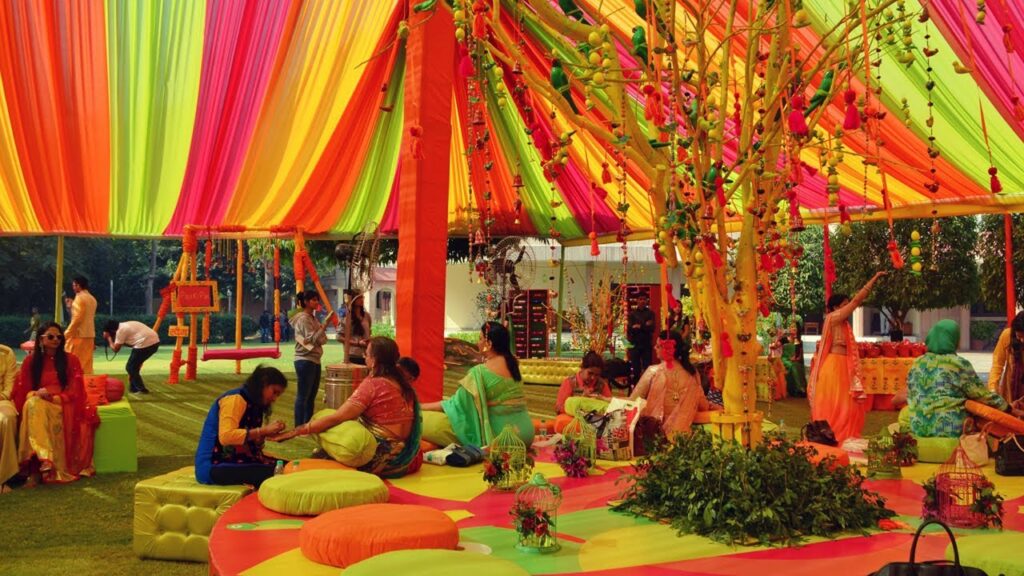
Guests wear the most colorful outfits of the entire wedding week. The dress code is always bright, and the more vibrant the better.
The groom’s entry at Mehndi is often a theatrical moment choreographed by his friends, and group dances prepared by the bride’s cousins and sisters are a highlight of the evening.
Mehndi Decor
Mehndi is the event where decoration teams have the most creative freedom. Popular themes include cherry blossom setups with pink floral ceilings and candlelit pathways, Moroccan-inspired tents with brass lanterns and colorful rugs, garden parties with floral arches and marigold curtains, and bold color-blocked floral arrangements with jewel-toned florals.
In the DFW area, Mehndi setups at venues like Verona Villa and Omni Las Colinas have become popular choices, featuring full venue transformations that turn hotel ballrooms into spaces that feel straight out of Lahore.
Nikkah: The Heart of a Pakistani Wedding
The Nikkah is the Islamic marriage contract and the most spiritually significant moment of the entire wedding. This is the actual marriage. Everything before it is a celebration, and everything after it is a continuation of that commitment.
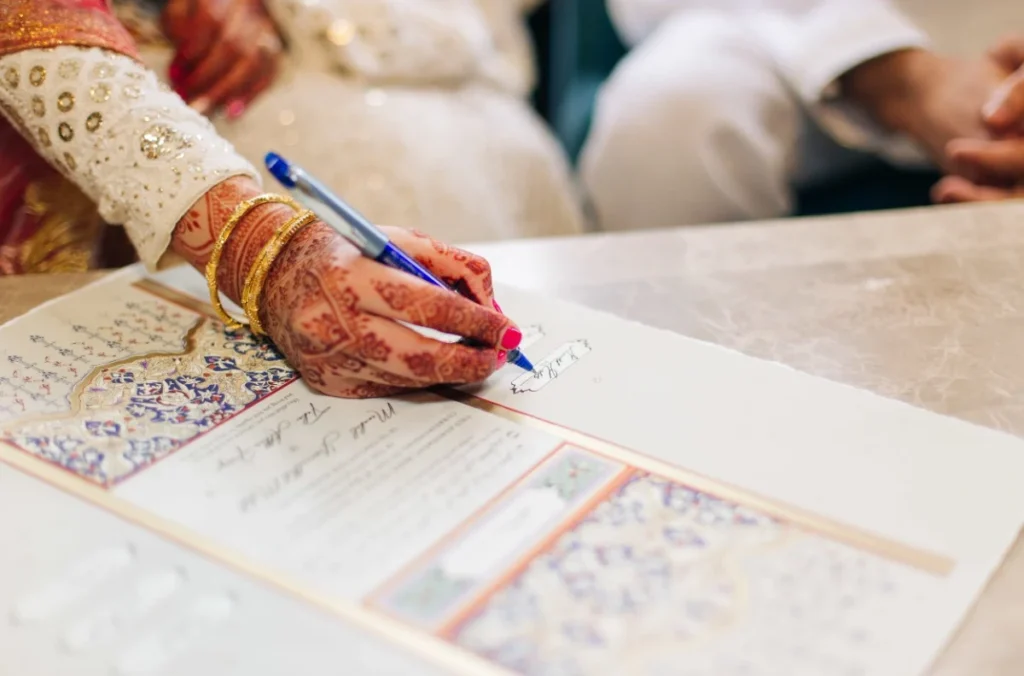
A religious officiant, called a qazi or imam, leads the ceremony. The couple signs the Nikkah Nama, the official marriage contract, in the presence of at least two witnesses from each side.
The bride and groom each formally accept the marriage three times, a process called ijab-o-qubool.
The Mehr
During the Nikkah, the groom formally agrees to give the bride a Mehr. This is a gift of money, gold, property, or any agreed-upon value. The Mehr belongs exclusively to the bride and cannot be taken back. Islamic law protects it as her right, and the Nikkah Nama outlines it clearly.
Nikkah for Pakistani Families in the US
In the DFW area, many families work with imams from mosques in Irving, Plano, or Frisco. The Nikkah is a religious ceremony, but most couples also sign a civil marriage license that same day to meet US legal requirements.
Nikkah Decor
Nikkah ceremony setups are elegant and serene. White floral arches, soft pastel draping, and candlelit arrangements create a calm and reverent atmosphere. Outdoor Nikkah setups under garden pergolas are a favorite choice for couples who want something intimate and beautifully simple.
Barat: The Grand Wedding Day
The Barat is what most people consider the main wedding day. It is the groom’s procession to the bride’s venue and the most visually spectacular event of the entire celebration.
The groom arrives with his family and friends, often to the sound of a live dhol or a traditional baraat band. He wears his most formal outfit, typically a sherwani in ivory, gold, navy, or emerald green.
Barat Fun Traditions
Pakistani Barat is full of playful rituals that lighten the mood and create some of the funniest memories of the entire wedding week.
Sehra Bandi
Before the groom leaves his home, his family places a Sehra over his face. A Sehra is a decorative veil made of flowers, strings of pearls, or gold accents that hangs from his turban or headwear. This ritual formally marks the beginning of his journey as a groom and is accompanied by prayers and blessings from elders.
Rasta Rukai
When the groom arrives at the bride’s venue, her sisters and cousins block the entrance and refuse to let him in. He has to negotiate his way through by offering money or gifts. The bride’s side always drives a hard bargain, and the crowd loves every moment of it.
Joota Chupai
Once the groom is inside, the bride’s sisters and cousins secretly steal his shoes. He cannot leave the wedding without them, which gives the bride’s side complete leverage. They will not return the shoes until the groom pays a satisfactory amount of cash. His friends try to protect the shoes beforehand, but the bride’s side almost always wins.
Doodh Pilai
Before the groom can be seated with his bride, her sisters bring him a glass of milk. He cannot drink it or proceed until he agrees to give them gifts or money. The sisters negotiate confidently, and the longer they hold out, the better the deal they get.
Barat Stage Decor
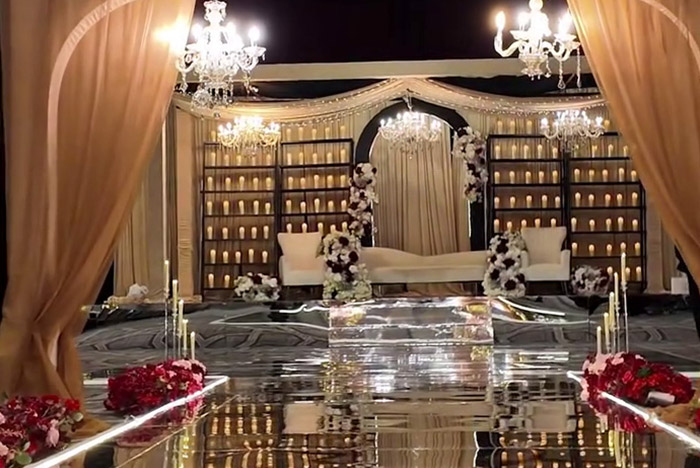
The Barat reception stage is the centerpiece of the whole wedding. It is where every photograph of the night is taken and where the couple sits together publicly for the first time as husband and wife.
Popular stage decor trends include crystal and chandelier-heavy luxury setups, 3D floral wall backdrops, dramatic ceiling-to-floor draping, monogrammed signage, and elevated aisle decor with fresh florals. Every element is chosen to make the couple look and feel extraordinary on their biggest day.
If you want a full list of every decor element to plan across all seven functions, see our complete wedding decor checklist for DFW couples.
Rukhsati: The Farewell
The Rukhsati is the most emotional moment of a Pakistani wedding. It marks the bride’s departure from her parents’ home as she begins her new life with her husband.
The bride walks out of the venue with the Holy Quran held open above her head, symbolizing that she leaves under Allah’s protection and blessings. Her family says their goodbyes, and few in the room stay dry-eyed.
The Welcome at the Groom’s Home
While the bride’s family is in tears, the groom’s family is celebrating her arrival. Traditional welcome rituals include throwing rice over the bride’s head for prosperity and asking her to step into a plate of rose petals or colored water.
The groom’s mother and sisters greet her warmly at the door. In some families, a tradition called Guthna Pakarna takes place, where the bride playfully holds onto the doorframe before entering, while the groom’s side tries to bring her in gently. It is always full of laughter and warmth.
Walima: The Wedding Reception and New Beginning
The Walima is the final major event of a Pakistani wedding and is hosted by the groom’s family. In Islamic tradition, the Walima is a Sunnah, a recommended practice used to publicly announce and celebrate the marriage.
It is typically held the day after Barat, either as a formal lunch or dinner. The atmosphere is calmer and more refined than the Barat, and the guest list often expands to include extended family, colleagues, and community members.
The Bride’s First Formal Appearance
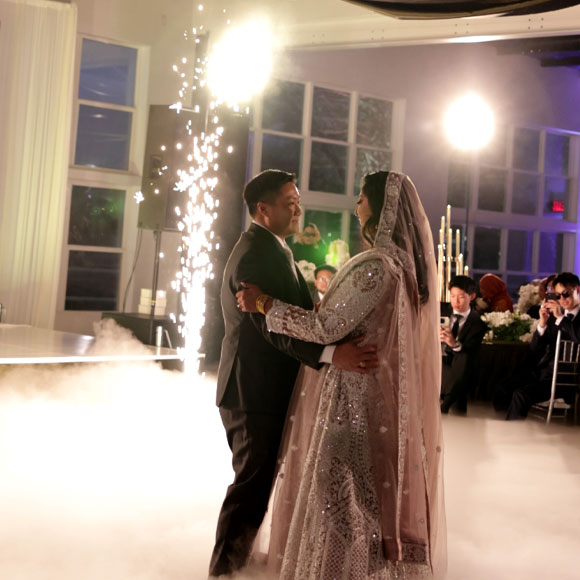
The Walima is the bride’s first public appearance as a daughter-in-law. She is formally introduced to the groom’s extended family and friends. The couple usually coordinates their outfits in matching or complementary colors.
Walima Decor
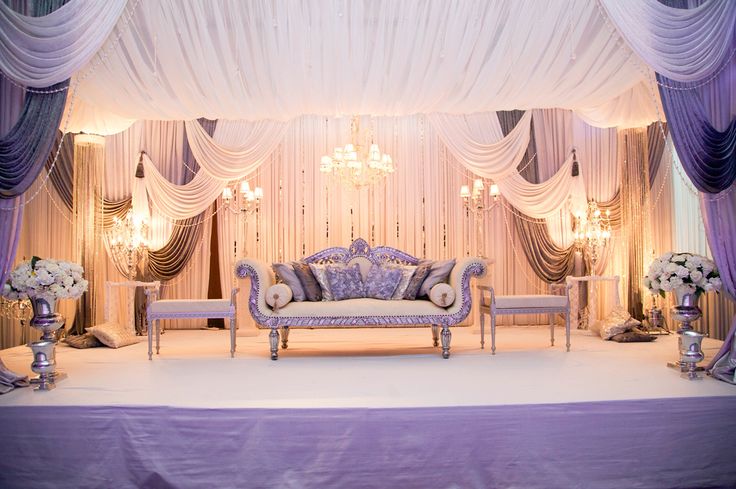
Walima decor leans toward sophistication rather than grandeur. Trending styles include soft floral arrangements in dusty rose, ivory, and sage, minimalist greenery walls, warm candlelit table settings with gold charger plates, and elegant outdoor reception setups.
The Walima stage is typically simpler than the Barat stage but equally well-designed and carefully styled.
Pakistani Wedding Food: A Celebration in Every Dish
Food is central to every Pakistani wedding function. The quality of the spread is always noticed, always talked about, and always remembered long after the wedding ends.
Dholki and Mayun
These informal gatherings feature homemade comfort food. Samosas, pakoras, chaat, dahi baray, mithai, and chai are staples. The focus is on sharing, warmth, and food that feels like home.
Mehndi
Mehndi food is festive and abundant. Biryani, karahi, kebabs, and naan are the main courses. Cold drinks, fruit chaat, and desserts like kheer and gulab jamun are always part of the spread.
Barat and Walima
These are the wedding’s formal sit-down meals. Guests expect a full spread featuring mutton or chicken karahi, biryani, daal, naan, raita, and a full dessert table with gulab jamun, firni, shahi tukray, and sometimes a wedding cake.
There is a well-known saying in Pakistani families that a wedding is only as good as its biryani. It is not entirely wrong.
Pakistani Weddings in the DFW Area
Pakistani communities across Irving, Frisco, Plano, Allen, and Euless have built a strong and growing wedding culture in the Dallas-Fort Worth area.
Finding a wedding decorator who genuinely understands South Asian wedding traditions makes a significant difference in how each function looks and feels. Each event has its own identity, and its decor should reflect that.
At Wedding Wonders by Uzma, we specialize in Pakistani and South Asian wedding decoration across the entire DFW area. From intimate Dholki setups to full Barat stage productions at venues like Verona Villa, Omni Las Colinas, and Marriott properties, we design every function to reflect the couple’s story while honoring the traditions their families hold most dear.
If you are planning a Pakistani wedding in DFW and want each event to look exactly how you imagined, contact us to discuss your vision.
FAQs
How many events are in a Pakistani wedding?
A full Pakistani wedding includes seven main events: Dholki, Mayun, Mehndi, Nikkah, Barat, Rukhsati, and Walima. Some families combine or skip certain events depending on budget and family preference.
How long does a Pakistani wedding last?
A traditional Pakistani wedding spans three to seven days. Pakistani families in the US often condense the celebrations into three to four days to accommodate guests traveling from different states.
What is the difference between Nikkah and Barat?
The Nikkah is the Islamic marriage contract, the religious and legal ceremony that makes the couple husband and wife. The Barat is the groom’s procession and the formal wedding reception that follows. The two are often held on the same day.
What is Mehr in a Pakistani wedding?
Mehr is a mandatory gift from the groom to the bride, agreed upon and formalized during the Nikkah. It belongs exclusively to the bride and is her right under Islamic law.
What is Joota Chupai?
Joota Chupai is a fun Barat tradition where the bride’s sisters and cousins steal the groom’s shoes and refuse to return them until he pays cash. It is one of the most entertaining moments of the wedding day.
What do guests wear to a Pakistani wedding?
Dholki and Mayun are casual and colorful. Bright shalwar kameez works perfectly for both. Mehndi calls for the most colorful outfit you own. Barat and Walima are formal events requiring full traditional or semi-formal attire.
What color does the bride wear at each function?
Traditionally, yellow for Dholki and Mayun, yellow or a bright festive color for Mehndi, and red for Barat. Walima attire is typically lighter and more elegant. Modern brides now choose from a much wider range of colors for each function.
What food is served at a Pakistani wedding?
Informal functions like Dholki and Mayun feature samosas, pakoras, biryani, and chai. Formal events like Barat and Walima offer full dinner spreads with karahi, biryani, kebabs, naan, and a dessert table including gulab jamun, firni, and shahi tukray.


