

Blog
A Complete Guide to Indian Wedding Events and Traditions
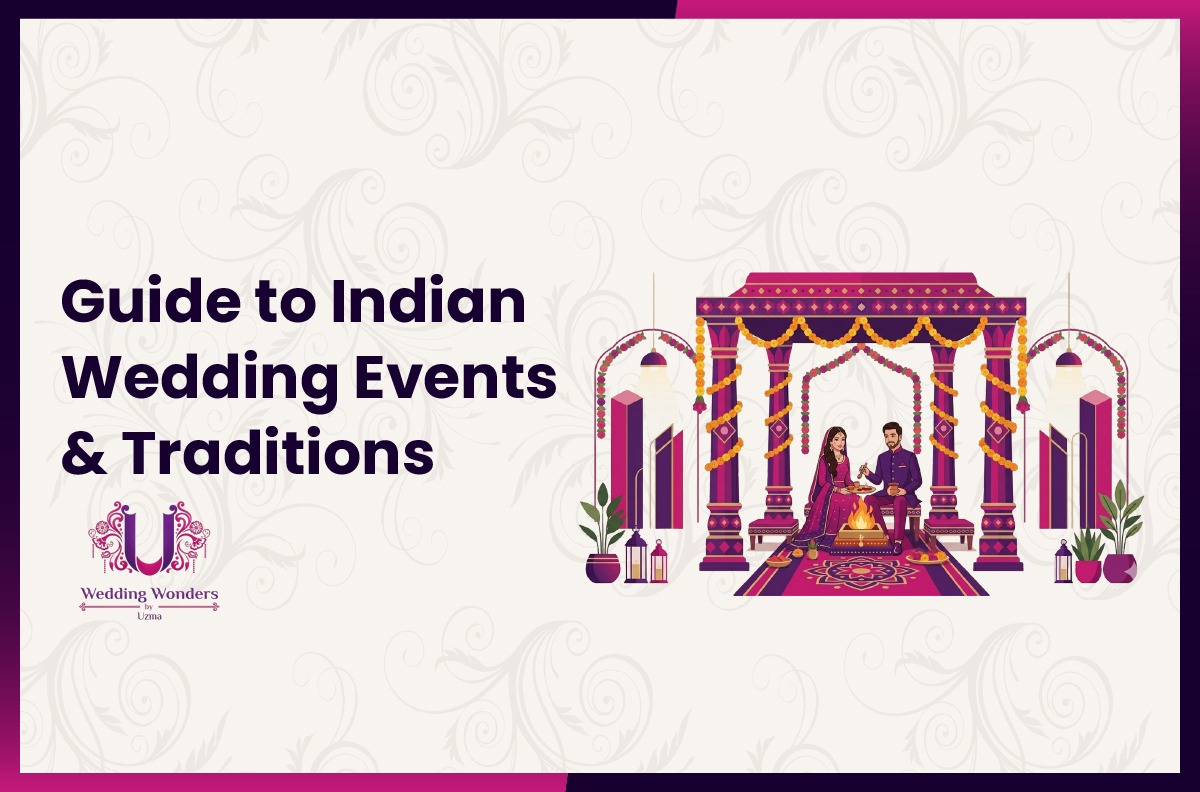
An Indian wedding is not a single day. It is a season of celebration that can stretch across a week, moving from quiet family blessings to a turmeric-covered morning, a night of dancing, a horse-led procession, and a fire-lit ceremony where seven steps bind two lives together. Each event carries its own meaning, its own mood, its own outfits, and its own decor.
This guide walks through the Indian wedding events and traditions in the order they usually unfold. For each one, you will find what it is, the tradition behind it, what the bride and guests wear, and how we style it as decorators. Along the way, you will see how these Hindu wedding rituals shift from one region of India to the next, and how families across the DFW area adapt them for a celebration held here in Texas.
Whether you are planning your own wedding, marrying into an Indian family, or attending as a guest, this is the full picture of what happens and what it all means.
Indian Wedding Events: The Full Sequence
Most Indian weddings move through three phases: the pre-wedding events, the wedding day, and the post-wedding events. The pre-wedding celebrations set the tone with music, color, and family bonding. The wedding day centers on the sacred ceremony under the mandap. The post-wedding events welcome the bride into her new family and send her off from her own.
A fuller celebration may include the Roka, Ganesh Pooja, Haldi, Mehndi, Sangeet, Baraat, the mandap ceremony with the Saptapadi, the Vidaai, and the reception. Few families include every ritual, and the exact events vary by region, religion, and family. North Indian, South Indian, Bengali, Gujarati, Punjabi, and Marathi families each bring distinct customs, and guests are usually invited to specific events rather than all of them.
Indian families across the United States often condense the celebrations into a long weekend to accommodate relatives flying in from different states, while keeping the heart of each tradition intact.
Pre-Wedding Events and Traditions
Roka and Engagement
The Roka is the first formal step, marking the two families’ agreement that the marriage will take place. Gifts and sweets are exchanged, blessings are given, and the couple is officially recognized as committed. It is often followed or combined with the Sagai, the ring exchange engagement ceremony. For many families, this is the moment the wedding truly begins.
Outfit and color: Semi-formal and celebratory. The couple often wears coordinated pastels or jewel tones, with lighter, elegant outfits rather than full bridal wear.
Ganesh Pooja
Many Indian families, particularly Maharashtrian and Gujarati, begin the wedding with a Ganesh Pooja, invoking Lord Ganesha, the remover of obstacles, to bless the celebrations ahead. It is an intimate, sacred gathering held at home or in a small venue, and it sets a calm, auspicious tone before the festivities build.
Decor: Soft, reverent, and traditional. Marigold and floral accents, a decorated pooja space, brass and diya detailing, and warm draping create a serene setting for the ritual.
Haldi Ceremony
On the morning of, or the day before the wedding, family members apply a paste of turmeric, sandalwood, and rose water to the bride and groom. The Haldi is believed to cleanse and bless the couple, calm pre-wedding nerves, and give the skin a natural glow. It is joyful and messy, full of laughter as relatives coat the couple in yellow.
Tradition: Held separately for the bride and groom in many families, though couples in the US increasingly share one Haldi. In some communities, the leftover turmeric is passed to unmarried siblings as a blessing for their own future.
Outfit and color: Yellow leads for everyone. The couple wears simple yellow outfits they do not mind staining, and guests follow in bright yellows and oranges.
Decor: Bright and daytime-friendly. Marigold backdrops, fresh florals, hanging genda strings, fabric canopies for shade, and floor seating. Protecting the space from turmeric staining is styled in as part of the setup.
Mehndi Ceremony
Intricate henna is applied to the bride’s hands and feet in designs that can take hours to complete. The henna is believed to bring love, beauty, and good fortune, and tradition holds that the darker the color develops, the stronger the bond between the couple. The groom’s initials are often hidden within the bride’s Mehndi design for him to find.
Outfit and color: The most colorful night of the week. The bride wears vibrant greens, oranges, pinks, or yellows, and guests wear the brightest outfits they own.
Decor: This is where decorators have the most creative freedom. Popular looks include floral swings and jhoolas, boho floor seating with mixed jewel tones, hanging umbrellas and parasols, mirror and gota accents, marigold curtains, and warm string lighting overhead.
Sangeet
The Sangeet is the great musical night of the wedding week. Both families gather to sing, dance, and perform choreographed numbers, often with friendly teasing of the couple. Historically a women’s event of folk songs, today it is a full performance night for everyone, with rehearsed dances and a DJ or live music.
Regional note: Punjabi families may hold a Jago night, dancing through the house with a decorated, lit pot. Gujarati families celebrate with Garba, the traditional circular dance.
Decor: Built for performance. An elevated stage with a bold backdrop that reads from the back of the room, uplighting in the couple’s palette, a clear dance floor, and lounge seating around it. This is one of the most transformable events of the week.
The Wedding Day Events and Traditions
Baraat
The Baraat is the groom’s grand arrival and one of the most exciting moments of the wedding. Traditionally, he arrives on a decorated horse, or even an elephant, accompanied by his dancing family and friends and a dhol player. Many grooms in the US now arrive in a decorated car, but the energy is the same: a loud, joyful procession that can take an hour to travel a short distance.
The bride’s family formally receives the groom’s party at the entrance with garlands and the Milni, where key relatives from both sides are introduced and embraced. A styled entrance arch and aisle set the tone the moment the procession reaches the venue.
Jaimala or Varmala
Once the groom reaches the ceremony, the couple exchange floral garlands in the Jaimala, their first act together in front of their guests. In a playful tradition, each side lifts their own garland so the other has to reach, turning the exchange into a lighthearted contest.
Mandap and Kanyadaan
The ceremony takes place under the mandap, a decorated four-post canopy that shelters the sacred fire, the agni. The pandit, or priest, guides the rituals. In the Kanyadaan, the bride’s parents formally give their daughter’s hand to the groom, one of the most emotional moments of the day.
For couples and decorators: The mandap must leave room for the agni kund, seating for the couple and both sets of parents, and space for the pandit to move. We confirm the ritual requirements before finalizing the design, so the decor supports the ceremony rather than crowding it.
Decor: Traditional marigold mandaps, open-frame floral structures for lower ceilings, South Indian brass and banana-leaf setups, or draped fabric mandaps, each matched to the family’s tradition and palette.
Saptapadi, the Seven Steps
At the heart of the Hindu ceremony, the couple takes seven steps together around the sacred fire, the Saptapadi or Saat Phere. Each step is a shared vow covering nourishment, strength, prosperity, family, and lifelong friendship. With these steps, the marriage becomes complete and binding.
Regional note: The number and nature of the circles vary. Many North Indian couples take seven, while some traditions take four. In South Indian weddings, the central act is the groom tying the mangalsutra or thali around the bride’s neck.
Sindoor and Mangalsutra
The groom applies sindoor, a red powder, to the parting of the bride’s hair, and ties the mangalsutra, a sacred necklace, around her neck. Both are enduring symbols of her married status and among the most recognizable moments of the ceremony.
Post-Wedding Events and Traditions
Vidaai
The Vidaai is the emotional farewell as the bride leaves her parents’ home. In a moving tradition, she tosses handfuls of rice or coins back over her head toward her family, a gesture of gratitude and a wish for their continued prosperity as she departs. It is often the most tearful moment of the entire wedding.
Griha Pravesh and Reception
When the bride arrives at her new home, the Griha Pravesh welcomes her, often by gently toppling a vessel of rice at the threshold to invite prosperity. The celebrations close with the reception, a grand, often more modern party hosted by the groom’s family, with a decorated stage, dinner, and dancing that carries the joy late into the night.
Decor: The reception is where the budget works hardest. A statement stage or sweetheart backdrop, varied centerpiece heights, an entrance moment, and lighting that transforms the room are the elements that carry it.
The Playful Rituals Guests Love
Beyond the sacred ceremonies, Indian weddings are full of lighthearted games that create the funniest memories of the week. These small traditions are what guests talk about long after.
- Joota Chupai: The bride’s sisters and cousins steal the groom’s shoes during the ceremony and refuse to return them without a cash ransom. The negotiation is loud, funny, and always in the bride’s side’s favor.
- Kaleera: In Punjabi weddings, the bride shakes her dangling kaleere over the heads of unmarried friends. Whoever a piece falls on is said to be next to marry.
- Chooda: The bride wears red and ivory bangles blessed by her maternal uncle and elders, often kept covered until the ceremony.
- Aeki Beki: The couple search a tray of milk and rose petals for a ring, and whoever finds it most often is teased as the one who will rule the household.
How Indian Weddings Differ by Region
India is not one wedding tradition but many, and the differences are significant. A guide that treats them as one misses what makes each celebration unique.
- North Indian: Elaborate Baraat, mandap ceremony, Saptapadi around the fire, and rich red and gold palettes.
- South Indian: Temple-centered, often simpler ceremonies using coconuts, turmeric, banana leaves, and jasmine, with the tying of the thali or mangalsutra as the central act.
- Bengali: The Subho Drishti, where the couple first see each other, and the Sindoor Daan, with distinctive white and red saree traditions.
- Gujarati: Garba nights, the playful Jaimala, and rituals like the groom’s mother-in-law playfully grabbing his nose on his arrival.
- Punjabi: Jago nights, Chooda and Kaleera, Anand Karaj in the Gurdwara for Sikh families, and famously high-energy celebrations.
- Marathi: Elegant, simpler ceremonies with distinctive paithani sarees and the Antarpat curtain lowered between the couple before the vows.
Indian Wedding Food: A Feast for Every Function
Food is central to every Indian wedding, and the spread is always noticed, always talked about, and always remembered. Menus are often vegetarian or offer generous vegetarian options, and they shift by region and by function.
Food for Pre-Wedding Gatherings
The Haldi, Mehndi, and Sangeet lean toward festive, shareable food. Chaat counters, samosas, pakoras, tikki, kebabs, and cooling drinks like lassi and jal jeera keep the energy going through long evenings of music and dance.
Food for Wedding and Reception
The main meals are grand and abundant. North Indian menus feature paneer dishes, dal makhani, biryani, naan, and rich curries, while South Indian celebrations may serve dosa, idli, sambar, and traditional banana-leaf meals. Gujarati weddings are known for elaborate vegetarian thalis, and live cooking stations are popular at modern celebrations.
Sweets and Mithai
No Indian wedding is complete without sweets. Gulab jamun, jalebi, rasgulla, laddu, kheer, and gajar ka halwa are staples, often set out at a full dessert table or handed to guests as they leave.
Indian Weddings in the DFW Area
Indian communities across Irving, Frisco, Plano, Allen, Dallas, and Fort Worth have built a rich and growing wedding culture in the Dallas and Fort Worth area. Multi-day celebrations are often held across banquet halls, hotels, and temples, with outdoor events planned around the Texas heat.
Finding an Indian wedding decorator who genuinely understands these traditions makes a real difference in how each function looks and feels, because each event has its own identity and its decor should reflect that. At Wedding Wonders by Uzma, we design decor for every Indian wedding event across the DFW area, from the Haldi and Mehndi to the mandap and reception, keeping one design thread across the week while honoring the customs each family holds most dear.
If you are planning an Indian wedding in DFW and want each event to look exactly how you imagined, contact us to discuss your vision. For Muslim and Pakistani celebrations, see our companion guide to Pakistani wedding events.
FAQs
How many events are in an Indian wedding?
A fuller Indian wedding can include the Roka, Ganesh Pooja, Haldi, Mehndi, Sangeet, Baraat, the mandap ceremony, the Vidaai, and the reception. Few families include every event, and the exact list varies by region and religion.
How long does an Indian wedding last?
Traditionally three to five days, sometimes a full week. In the US, many families condense the celebrations into a long weekend to accommodate guests traveling from different states.
What is the main event of an Indian wedding?
The ceremony under the mandap, where the couple takes the seven steps of the Saptapadi around the sacred fire. This is the ritual that makes the marriage complete.
What are the pre-wedding events in an Indian wedding?
The most common are the Roka and engagement, the Ganesh Pooja, the Haldi, the Mehndi, and the Sangeet, though the exact events vary by region, religion, and family.
Do Indian wedding traditions vary by region?
Yes, significantly. North Indian, South Indian, Bengali, Gujarati, Punjabi, and Marathi weddings each have distinct rituals, attire, and ceremonies, even though many share events like the Mehndi and Baraat.
What is the Saptapadi?
The Saptapadi, or seven steps, is the core of the Hindu ceremony. The couple takes seven steps around the sacred fire, each representing a shared vow, and with them the marriage becomes binding.
What do guests wear to an Indian wedding?
Bright, festive colors, and never white or black for traditional ceremonies. Women often wear a saree or lehenga and men a kurta or sherwani. The Mehndi and Sangeet call for your most colorful outfits.
Do you decorate Indian weddings in the DFW area?
Yes. We design and set up decor for every Indian wedding event across Irving, Frisco, Plano, Allen, Carrollton, Dallas, Fort Worth, and the wider DFW area.


